Interiors with Character: The Key Trends for Autumn 2026
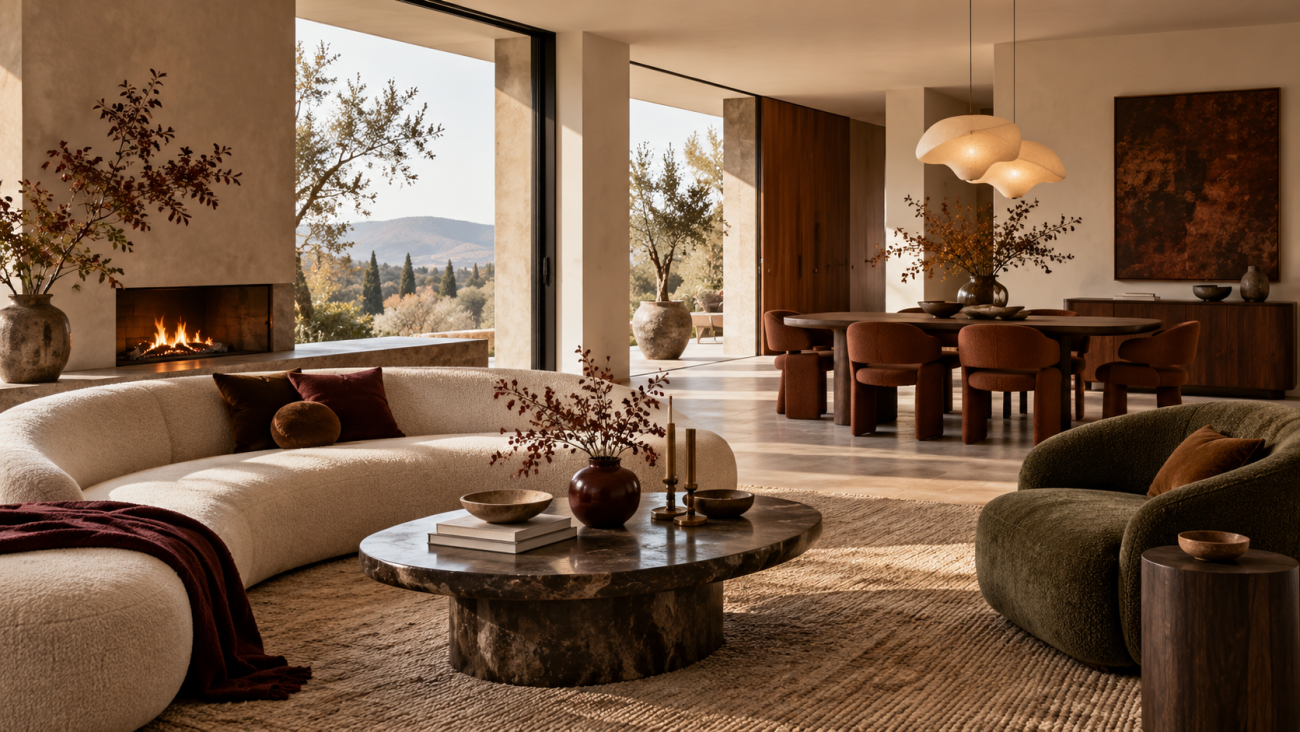
Characterful materials, deep tones, and pieces that take centre stage define a season that favours warmer, more personal interiors.
With the arrival of autumn, the home changes too. We spend more time indoors and look for warmer, cosier surroundings, but this season’s trends go far beyond adjusting the colour palette or bringing in textiles for the colder months.
This autumn of 2026, interior design favours spaces with greater personality. Dark woods are regaining prominence, natural materials show off their textures and imperfections, and furniture is gradually breaking free from the rigidity of straight lines. Decoration gains nuance without filling the rooms or giving up a contemporary aesthetic.
The return of dark wood
In recent years, light woods have dominated a good share of interior design projects. Natural oaks, sandy tones, and soft finishes have built those bright, minimalist spaces that are still very much in evidence. This autumn, however, deeper tones are starting to win back ground.
Walnut, smoked woods, and rich brown finishes appear on tables, sideboards, shelving, and small items of furniture. The aim is not to darken the rooms, but to introduce points of contrast that add depth and make the whole more interesting.
A dark wood dining table in a bright space or a walnut cabinet against a neutral wall can be enough to bring in this trend. Combining it with stone, natural fabrics, or light tones also keeps things balanced and avoids overly heavy atmospheres.
Materials and textures that show their character
The pursuit of overly perfect interiors is beginning to make room for materials where texture, grain, or even small irregularities are part of the appeal.
Natural stone, wood with visible grain, handcrafted ceramics, linen, and textured fabrics gain presence this season. In place of completely uniform surfaces, people are seeking finishes with depth, capable of seducing both the eye and the touch.
This trend also restores the value of craftsmanship and of pieces that do not look mass-produced. A ceramic vase, a stone side table, or certain textiles can transform a room without major changes.
The result is contemporary spaces that are less rigid, where the quality of the materials matters more than the quantity of decorative items.
Autumn dresses in deeper tones
The season’s colours are evolving too. This year, the traditional range of earth tones expands to include chocolate brown, burgundy, deep green, terracotta, plum, and various spiced shades, moving from warm neutrals to more intense hues.
The main difference lies in how they are introduced. They are no longer confined to cushions, blankets, or small objects that disappear when the season ends. Intense tones now reach armchairs, headboards, rugs, side tables, and even selected walls.
Colour combinations that seek harmony through contrast are also gaining strength: pastel blue alongside brown in its warmest version, bottle green with burgundy, or even toasted yellow with wine red.
The key is to use them in a balanced way. In homes where natural light and neutral bases predominate, these colours can considerably change the perception of a space with few interventions and without sacrificing brightness.
Curves continue to conquer the space
Organic shapes remain present this autumn. Enveloping sofas, rounded armchairs, oval tables, and furniture with softened corners offer an alternative to compositions dominated solely by straight lines.
But the novelty lies not only in curves. Interiors in 2026 also allow themselves to mix more. A vintage piece can sit alongside contemporary furniture, while a handcrafted object can deliberately break the uniformity of a room.
This combination creates less predictable spaces and avoids the feeling that all the decoration comes from a single collection. The aim is not to give up coherence, but to achieve it without every element having to be exactly like the last.
When light also decorates
With fewer hours of natural light, autumn is also a good moment to pay attention to interior lighting. And this season, lamps are definitively no longer seen as purely functional items.
Sculptural designs, glass shades, ceramics, alabaster, and metallic finishes add personality even when switched off. A pendant lamp over the dining table or a well-chosen table lamp can become one of the main features of a room.
Combining different light sources is also gaining importance. Instead of relying on a single overhead light, bringing together floor lamps, table lamps, or indirect lighting lets you adapt the atmosphere to each use and create far more pleasant spaces during the months when it gets dark earlier.
Homes with a soul of their own
Beyond each specific trend, this autumn’s interior design reflects a broader shift. Homes are moving away from overly neutral, impersonal spaces to incorporate materials, objects, and choices that speak of those who live in them. It is not about filling the rooms, but about choosing better.
Combining a special piece with a contemporary design, introducing materials that age well, or opting for elements that do not respond solely to fashion makes it possible to build interiors with greater identity.
But none of this is possible without a good starting point. Spaciousness, natural light, a functional layout, and a careful selection of materials are not trends. They are the foundation on which each owner builds their home.
This is the philosophy on which Alibuilding conceives every project. Contemporary, functional homes, designed from the outset so that their owners can make them truly their own, because a well-designed home will not go out of fashion, but will adapt to trends on a solid, personal foundation.